
How to Improve Employee Retention and Reduce Turnover
If you want to improve employee retention, you can’t just throw solutions at the wall and see what sticks. You have to start by figuring out why your people are leaving in the first place. This means digging into your turnover data to spot patterns and getting direct feedback from your team to understand the real story behind the numbers.
Pinpointing Why Your Best People Are Leaving

Before you can fix a leaky bucket, you have to find the holes. Guessing at the cause of your retention problem is a surefire way to waste time and money on strategies that don’t work. The first, most critical step is to become a detective inside your own business.
It’s about asking the right questions. Who, exactly, is leaving? Are you losing top performers? Is it new hires who don’t even make it to their one-year anniversary? Or are you seeing an exodus from one specific department? Each of these scenarios tells a completely different story.
High turnover among your star players might signal a lack of growth opportunities. If new hires are leaving in droves, it’s a good bet your onboarding process is broken or you’re setting unrealistic expectations during hiring.
Analyzing Your Departure Data
Start by slicing and dicing your turnover data. Don’t just settle for a single, company-wide number. Breaking it down will give you a much clearer picture of what’s really going on.
Here are a few key metrics that will give you immediate insight:
- Voluntary vs. Involuntary Turnover: This is the most basic split. Are people choosing to leave, or are you letting them go? A high voluntary turnover rate is a massive red flag for issues with satisfaction and engagement.
- First-Year Turnover Rate: How many new hires are gone within 12 months? This number is a direct reflection of how effective your hiring and onboarding really are. If it’s high, something is seriously wrong.
- Top Performer Turnover: Losing your “A” players hurts the most. Tracking this tells you if you’re failing to challenge, reward, and retain the very people who drive your business forward.
- Departmental Turnover: If one team has a revolving door, it often points to a specific problem—usually with a manager, an unmanageable workload, or a toxic team culture.
The most significant metric to start measuring before planning a new retention strategy is your company’s turnover rate. Without knowing how many people are leaving, when they’re leaving, and what part of the company they’re leaving from, you can’t begin to figure out why they’re leaving.
Going Beyond the Numbers with Interviews
Data tells you the what, but conversations with people tell you the why.
Exit interviews are a good start, but let’s be honest—they often result in vague, “safe” answers. Most people don’t want to burn a bridge on their way out. To get real feedback, you have to build trust. Have a neutral third party, like someone from HR, conduct the interview and promise confidentiality.
Ask open-ended questions like, “What was the final straw that made you start looking for a new job?” or “If you could change one thing about your time here, what would it be?”
Even better are “stay” interviews. These are proactive chats with your current high-performers. Ask them what keeps them coming back every day. Find out what they love about their job and, just as importantly, what might tempt them to leave. These conversations are pure gold—they help you fix problems before they ever lead to a resignation.
To learn more about the financial impact of turnover, you can find valuable insights on managing staff turnover and its costs. By combining hard data with honest feedback, you’ll get a complete picture of your retention challenges and be ready to build solutions that actually work.
Creating an Unforgettable Onboarding Experience

The first impression a new hire has of your company is everything. Those initial 90 days are your golden opportunity to prove they made the right decision by joining your team.
Think about it from their perspective. A disorganized, impersonal, or chaotic start can plant serious seeds of doubt, making them wonder if they’ve made a huge mistake.
This critical window is about so much more than just handing over a laptop and collecting paperwork. A truly great onboarding experience is a well-thought-out program designed to make new hires feel confident, connected, and valued from day one. Your goal is simple: make them feel like they’ve come home.
Beyond the Welcome Email
A powerful onboarding process kicks off long before your new employee even walks through the door. It’s all about building excitement and calming those first-day jitters. The moment they accept your offer, the clock on your retention efforts has already started ticking.
Here are a few pre-boarding actions that make a huge difference:
- Send a Welcome Kit: A small package with company swag, a handwritten welcome note from their manager, and a schedule for their first week shows you’re genuinely excited for them to start.
- Share the Plan: Email a clear agenda for their first week. Knowing what to expect—who they’ll meet, what they’ll learn—turns anxiety into anticipation.
- Handle Paperwork Digitally: Get all the tedious HR forms out of the way before they arrive. This frees up their first day to be about people, culture, and connection, not administrative tasks.
This proactive approach makes their first day feel less like a nerve-wracking unknown and more like the exciting first step of their new career. For a deeper look at structuring this process, check out these essential employee onboarding best practices.
A great onboarding program should answer three key questions for the new hire: 1) Is this job what I was told it would be? 2) Do I have the tools and support to be successful here? 3) Do I see a future for myself with this team?
Designing a Structured First 90 Days
Once they arrive, the real work of integration begins. A well-designed onboarding plan systematically immerses new hires into your company culture and their specific role. It’s a marathon, not a sprint, and should be carefully mapped out.
A strong 90-day plan includes key milestones:
- The First Week: This should be about connection and context, not just tasks. Schedule one-on-ones with key team members across different departments. Assign a dedicated buddy or mentor who isn’t their direct manager to answer all the informal, “silly” questions they might be afraid to ask.
- The First 30 Days: The focus here should be on creating early wins. Assign a small, achievable project that lets them show off their skills and build immediate confidence. Their manager should also set up a weekly check-in to provide feedback and open the door for questions.
- The First 90 Days: Now, the focus shifts to performance and full integration. The new hire should have a crystal-clear understanding of their key performance indicators (KPIs) and how their work directly contributes to the company’s bigger picture.
This structured journey ensures no one falls through the cracks. It’s how you transform a new person from an outsider into a fully integrated, productive member of the team.
Embedding Culture and Growth from Day One
Your company’s values can’t just be words on a wall; they need to be lived and breathed throughout the onboarding experience. If collaboration is a core value, make sure their first project is team-based. If you value continuous learning, introduce them to the professional development budget on their very first day.
Showing a commitment to their career path early is a powerful retention tool. Investing in your people is one of the most effective ways to improve employee retention.
When you prioritize career development and upskilling opportunities, you send a clear message: we see a long-term future for you here. A staggering 93% of employees say they’re more likely to stay with companies that invest in their professional growth. People who feel valued through these programs are 63% less likely to look for another job.
By showing a new hire their path forward from the very beginning, you give them a compelling reason to stay and build their career with you.
Equipping Managers to Be Retention Champions

You’ve heard it a million times, but it’s a cliché for a reason: people don’t quit jobs, they quit bosses. While pay and perks definitely matter, the single biggest factor in an employee’s day-to-day experience is their direct manager.
Your managers are the face of your company. They’re on the front lines, shaping morale, motivation, and ultimately, the decision to stay or go. Investing in their development isn’t a nice-to-have—it’s a core strategy to improve employee retention.
The numbers back this up. A staggering 50% of employees who leave their jobs say their manager was the main reason. On the flip side, when people feel genuinely supported by their boss, their engagement goes through the roof. It’s simple: trust in leadership is the bedrock of loyalty. You can find a deeper breakdown of the top concerns for employers on c-suiteanalytics.com if you want to see more data on this trend.
Transforming Managers into Coaches
The old-school model of a “boss” who just delegates tasks is dead. Today’s most effective leaders are coaches. They focus on development, offer real support, and build genuine trust with their teams.
This shift doesn’t happen by accident. Most people get promoted into management because they were excellent at their previous role, not because they’re natural-born leaders. You have to give them the tools to succeed.
Here are the essential skills your manager training should cover:
- Running Effective One-on-Ones: These meetings need to be sacred time for the employee, not just a status report for the manager.
- Giving Constructive, Actionable Feedback: Teach them how to deliver feedback that builds people up, not tears them down.
- Recognizing Contributions Meaningfully: Help them move beyond generic praise to specific, timely, and impactful recognition.
- Identifying Early Warning Signs: Train them to spot the subtle signals of burnout or disengagement before someone has one foot out the door.
Managers who are trained to coach and support their teams can dramatically improve retention rates. The table below highlights specific actions and their direct impact.
Manager Actions That Drive Retention
| Manager Action | Impact on Retention |
|---|---|
| Conducts Regular, Meaningful 1-on-1s | Creates a safe space for feedback and career discussions, making employees feel valued. |
| Provides Specific, Timely Recognition | Reinforces positive behaviors and shows employees their hard work is noticed and appreciated. |
| Coaches for Skill Development | Invests in an employee’s future, showing a path for growth within the company. |
| Connects Daily Work to Company Goals | Gives employees a sense of purpose and helps them see the impact of their contributions. |
| Advocates for Team Needs | Builds trust by showing they have their team’s back when it comes to resources or support. |
By focusing on these behaviors, you’re not just training managers—you’re building a culture where people feel supported enough to do their best work and stay for the long haul.
Mastering the Art of the One-on-One
A great one-on-one is probably the most powerful retention tool a manager has. It’s a dedicated space to build rapport, understand career goals, and uncover problems before they escalate. For these meetings to really count, they have to be consistent, employee-led, and focused on the future.
Train your managers to stop asking, “What did you do last week?” and start asking questions that spark real conversation.
A manager’s goal in a one-on-one shouldn’t be to get a project update. It should be to answer three underlying questions for their team member: Do you feel valued? Are you growing? And what can I do to help you succeed?
Encourage them to try questions like these:
- “What was a win for you last week, and what made it a success?”
- “What’s one thing that’s currently blocking your progress or causing frustration?”
- “What skill are you hoping to develop in the next quarter?”
- “Is there anything I can be doing differently to better support you?”
This simple change turns a reporting session into a coaching conversation. It makes employees feel heard, which is a huge part of feeling valued.
The Power of Meaningful Recognition
Recognition isn’t just about an annual bonus or a “good job” in a team meeting. The best recognition is specific, timely, and personal. Some people love public praise; others would much rather get a quiet thank-you note or a gift card for coffee.
A manager who takes the time to learn what motivates their team members can make a huge impact with very little cost. Acknowledging the extra hours someone put in to hit a deadline shows you see their effort, not just the result. That’s how you build real loyalty.
Consider giving your managers a small discretionary budget for spot rewards. This empowers them to recognize great work on the fly, reinforcing positive behavior and making people feel genuinely appreciated. It’s a small investment that pays off big in morale and retention.
Modernizing Your Compensation and Benefits Package
A great culture and supportive managers are essential, but let’s be honest—they can only go so far if your pay and benefits package feels unfair or stuck in the past. In a competitive market, your total rewards package is a massive piece of the retention puzzle.
To build a long-term future with you, your team needs to feel financially secure and genuinely cared for. This isn’t just about throwing more money at people; it’s about building a thoughtful, holistic system that shows you understand what they truly value.
Moving Beyond Just a Paycheck
Transparent and equitable pay is the bedrock of any modern compensation strategy. When people don’t understand how their pay is determined or what the path forward looks like, they start to assume the worst. That uncertainty is a fast track to disengagement and one foot out the door.
Putting a clear compensation framework in place takes the mystery out of pay and creates a real sense of fairness. This usually involves a few key things:
- Establishing Pay Bands: Create defined salary ranges for each role based on solid market data, experience, and level of responsibility. This is your best defense against pay inequity and keeps things consistent.
- Defining Career Paths: You have to show people what their future can look like with you. Map out clear progression pathways, detailing the skills and performance milestones needed to get to the next level. When people see a road ahead, they’re much more likely to stick around for the journey.
- Conducting Regular Audits: At least once a year, review compensation across the company to find and fix any disparities based on gender, race, or other factors. Nothing builds trust faster than a demonstrated commitment to fairness.
Getting this system structured properly is crucial, and it hooks directly into your financial operations. If you need help with the technical setup, our article on how to set up payroll for a small business is a great place to start to make sure your system is both compliant and efficient.
Benefits That Genuinely Matter
Today’s workforce expects benefits that support their whole life, not just their physical health. While medical, dental, and vision are table stakes, the benefits that truly move the needle are the ones that offer real flexibility and address modern-day challenges. If your benefits package hasn’t had a major refresh in the last five years, it’s probably falling short.
Think about incorporating benefits that show you’re listening to what your employees actually need:
- Mental Health Support: This is no longer a “nice-to-have”—it’s a necessity. That could mean access to therapy through an Employee Assistance Program (EAP), subscriptions to wellness apps like Calm or Headspace, or dedicated mental health days.
- Flexible Work Arrangements: Giving your team hybrid or remote options shows you trust them to manage their own time. For roles that have to be on-site, think about compressed workweeks or flexible start and end times.
- Meaningful Professional Development: A real budget for courses, certifications, or conferences shows you’re invested in their long-term career, not just the job they’re doing today.
- Financial Wellness Programs: Things like student loan repayment assistance, access to financial advisors, or retirement planning workshops can relieve some of the biggest stressors in your employees’ lives.
A “one-size-fits-all” benefits package is a relic of the past. The goal is to offer a flexible suite of options that allows employees to choose the support that is most relevant to their life stage and personal needs.
Investing strategically here is one of the most direct ways to boost retention. In fact, companies that allocate an average of $4,700 per employee to retention initiatives see 87% higher retention rates and a significant return on that investment.
When you thoughtfully design a total rewards package that’s transparent, equitable, and genuinely supportive, you create a powerful reason for your best people to stay. You’re not just offering a job; you’re offering a stable and promising future.
Building a System for Continuous Improvement
Let’s be clear: improving retention isn’t a one-and-done project you can just check off a list. It’s a living, breathing part of your business that demands constant attention. A strategy that works wonders today might be totally off the mark six months from now.
The real goal is to shift from putting out fires to proactively building a system that keeps you ahead of the curve. You want to keep a finger on the pulse of your team, spotting potential issues long before they turn into resignation letters. This creates a sustainable loop of listening, learning, and responding.
Creating a Simple Retention Dashboard
You don’t need some fancy, expensive business intelligence platform to get started. Honestly, a simple dashboard in a spreadsheet or your existing HR software can give you incredible clarity. The trick is to track a few core metrics consistently so you can actually see trends over time.
This dashboard becomes your single source of truth. It’s how you connect the dots between your actions and real-world outcomes. For example, after you roll out that new manager training program, you should be able to see a corresponding lift in engagement scores for their teams over the next quarter or two.
Here are the absolute essentials to track:
- Overall Turnover Rate: Your main high-level number.
- Voluntary vs. Involuntary Turnover: This is crucial. It tells you if people are choosing to leave or if you’re asking them to.
- First-Year Turnover: A raw, direct measure of how well your hiring and onboarding processes are working.
- Employee Net Promoter Score (eNPS): A quick and powerful snapshot of employee loyalty. It all boils down to one question: “How likely are you to recommend this as a place to work?”
By looking at these numbers every month or quarter, you stop guessing and start making data-driven decisions.
Using Pulse Surveys to Gather Ongoing Feedback
The old-school annual engagement survey is quickly becoming a relic. Think about it—by the time you collect and analyze all that data, it’s already out of date. Instead, lightweight pulse surveys are far more effective for getting real-time feedback without burning out your team.
A pulse survey is just a short, frequent check-in, usually only five to ten questions sent out quarterly or even monthly. This approach has a huge advantage: it gets your employees into the habit of giving regular feedback, making it a normal part of your company culture.
The key to a successful retention strategy is shifting from a single yearly event to a continuous conversation. Pulse surveys and regular check-ins open the door for that conversation, giving you the insights you need to act before it’s too late.
This steady flow of information helps you stay ahead of problems. If you suddenly see scores related to work-life balance dip after a tough quarter, you can address it right away—instead of waiting for burnout to set in and good people to walk out the door.
This is all part of a bigger picture. The image below shows how different pieces—like pay, benefits, and growth opportunities—come together to form the “total rewards” package that really influences whether people stay or go.
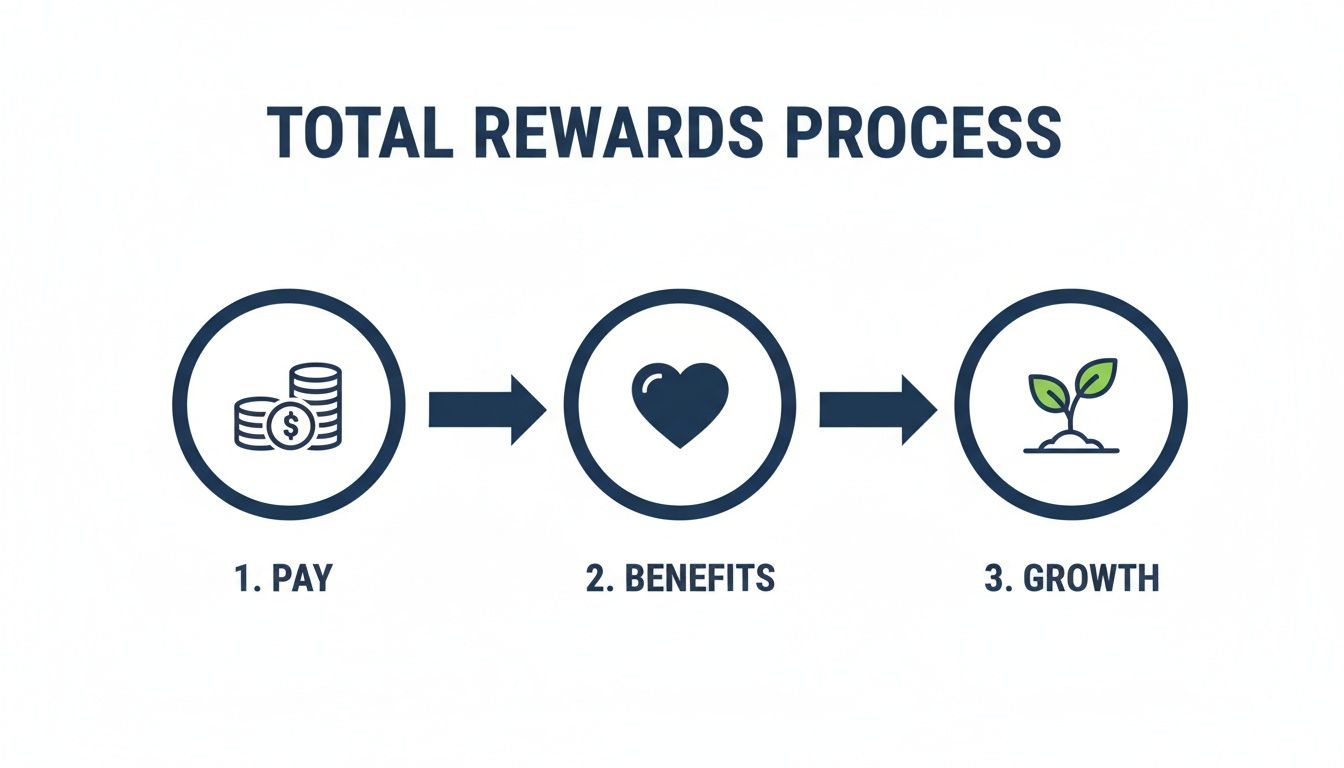
As you can see, you have to take a multi-faceted approach. You can’t just throw money at the problem; you need to address financial, health, and career needs all at once.
Closing the Feedback Loop
Collecting data is only half the battle. The single most important step in this whole process is closing the feedback loop. When your employees take the time to share their thoughts, they absolutely have to see that you’re listening and, more importantly, taking action.
After each survey, share a high-level summary of the findings with the whole company. Acknowledge what you heard—the good and the bad. Then, clearly communicate one or two specific actions you’re going to take in response.
This simple act builds an incredible amount of trust. It shows everyone that their voice actually matters and that giving feedback isn’t just an empty exercise; it’s a catalyst for real change that helps the entire business.
Common Questions About Employee Retention
Even with the best-laid plans, you’re bound to run into a few tricky situations when you start focusing on retention. Let’s walk through some of the most common questions that pop up for leaders putting these strategies into practice.
What Should I Do When a Great Employee Gets a Counteroffer?
It’s the moment every manager dreads. Your star player puts in their notice, and your first instinct is to match the competitor’s offer. It seems like the easiest way to keep a top performer.
But this is almost always a short-term fix. The real reasons they started job hunting—whether it was a lack of growth, a disconnect with their manager, or just plain burnout—don’t magically vanish with a bigger paycheck.
Think about it: statistics consistently show that a huge percentage of employees who accept a counteroffer are gone within a year anyway. Instead of just throwing money at the situation, treat this as a critical learning opportunity. Sit down with them and have a real, honest conversation to understand what’s driving their decision. Their feedback is pure gold for preventing the next person from walking out the door for the exact same reason.
How Much Does Employee Turnover Actually Cost?
It’s easy to underestimate the true financial hit of losing an employee, but the costs go way beyond just their salary. When you start adding it all up, the numbers can be staggering.
You have to consider all the domino effects:
- Recruitment Costs: This isn’t just the fee for a recruiter. It’s the cost of job board postings and, more importantly, the dozens of hours your team spends sifting through resumes and conducting interviews.
- Onboarding and Training: Getting a new hire up to speed takes a serious investment of time and resources. For the first few months, their productivity is naturally lower while they learn the ropes.
- Lost Productivity: The gap between an employee leaving and a new one starting can create a massive hole in your team’s output. Plus, a departing employee’s productivity often dips well before their last day.
- Team Morale: High turnover is contagious. When people see their colleagues leaving, it can make the remaining team members feel overworked, anxious, and maybe even start looking themselves.
When you run the numbers, the total cost to replace an employee can be anywhere from 50% to 250% of their annual salary. Suddenly, investing in retention doesn’t just feel good—it becomes one of the highest-ROI moves you can make.
How Can I Measure the ROI of My Retention Efforts?
Measuring the return on your retention initiatives is the key to proving their value and justifying the investment. The good news is, you don’t need some ridiculously complex formula to get a clear picture.
Start by calculating your turnover cost before you implement any changes. This is your baseline. Then, track how your turnover rate changes over the next six to twelve months.
Let’s use a simple example. Say turnover costs your business $200,000 a year. You decide to invest $30,000 in a new manager training program and beef up your benefits package. A year later, you find your turnover rate has dropped by 25%. That’s a $50,000 savings in replacement costs. After your initial investment, you’re left with a net savings of $20,000—a clear, positive return.
Pair this financial tracking with metrics like your Employee Net Promoter Score (eNPS) to see how sentiment is improving. This helps you connect the dots between your actions, your culture, and your bottom line.
Navigating the complexities of compensation, benefits, and retention strategies can be challenging. Steingard Financial provides expert People Advisory services, helping you build the systems that make your best people want to stay. Find out how we can support your team’s growth.