 Skip to content
The Steingard CFO Dashboard
Most owners do not need a CFO. They need the information a CFO would look at.
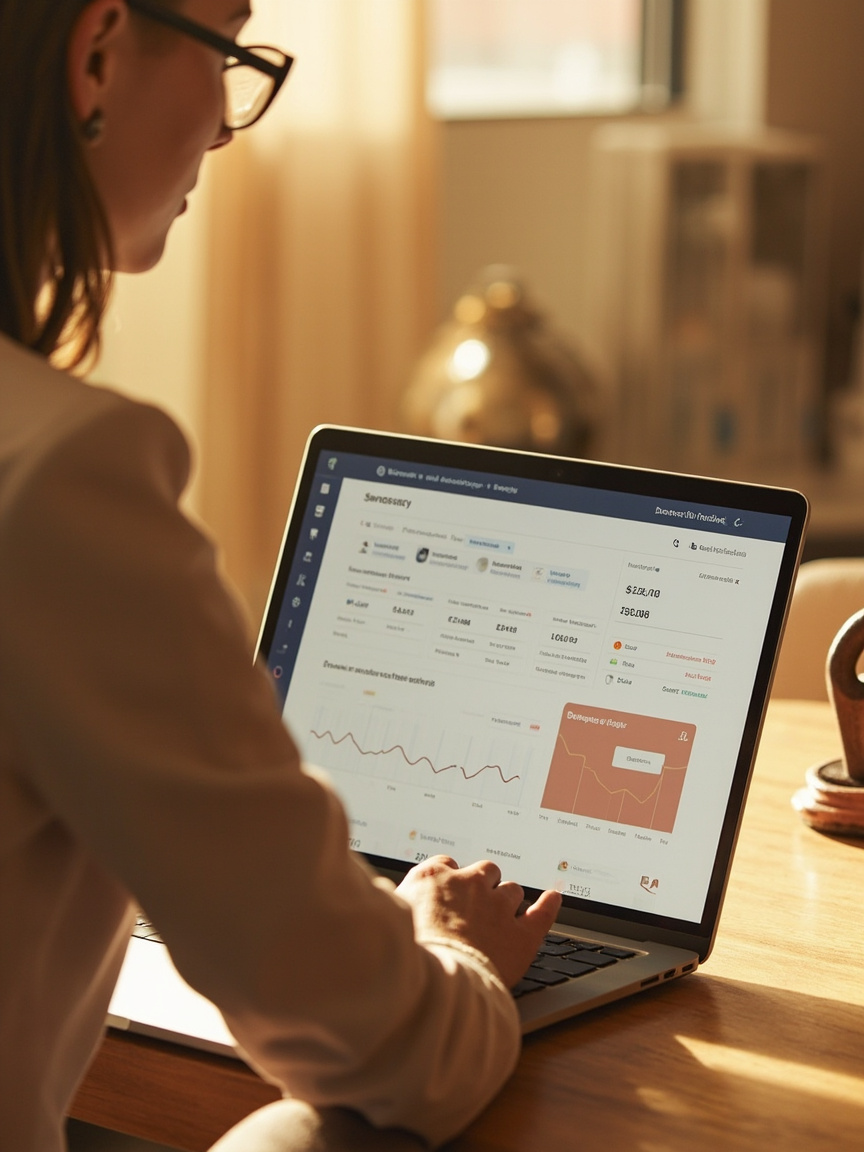
The Steingard CFO Dashboard gives owner-operated businesses a clearer view of approved financial reporting, trends, cash-related information, receivables, payables, profitability indicators, alerts, and human-reviewed commentary.
It is designed to help owners move from receiving reports to understanding what deserves attention.
Dashboard value proposition
One place for the owner view
Bring the approved reports, trends, commentary, alerts, and recurring financial questions into a clearer experience.
Prioritized information
Focus attention on the items most relevant to cash, collections, obligations, profitability, and the current reporting period.
Human-reviewed commentary
Pair financial information with reviewed explanations, open questions, and recommended follow-up within the service scope.
A recurring operating rhythm
Use weekly, monthly, or quarterly views according to the client’s plan and available data.
Connected client experience
Support secure reports, document requests, notes, reminders, and approved communication without exposing private information on the public website.
How it works
How it works
- Connect the approved reporting workflow — the dashboard receives or displays information from approved accounting reports, client records, and Steingard workflows.
- Organize the owner view — relevant statements, trends, alerts, commentary, and open questions are arranged for the client’s service plan.
- Review the information — Steingard reviews the applicable records, limitations, and draft commentary before client delivery.
- Use the dashboard in the operating rhythm — the owner reviews the information, responds to requests, and tracks agreed financial follow-up.
Who it is for
- Existing Steingard bookkeeping and financial-operations clients
- Owner-operated service businesses
- Contractors and home-service companies
- Professional-service firms
- Small e-commerce and operating businesses with reliable reporting data
- Owners who need a more understandable monthly financial review
What you are choosing between
A dashboard, a monthly report, or hiring someone
Owners reaching for a dashboard are usually trying to solve one of three quite different problems, and only one of them is solved by continuous visibility.
A dashboard
Continuous visibility of a small number of measures you have already decided matter. Useful when the question is “where does this stand right now” and you know which figures answer it. It reports; it does not interpret.
Monthly reporting
Interpretation on a cycle: what changed, what is likely behind it, what deserves attention. Better suited when the question is “what should I do about this”. See executive financial reporting.
Hiring for the role
Where a business needs someone accountable for financial strategy, that is a hiring decision. This is not a substitute for it, and treating a dashboard as one is how businesses end up with excellent visibility of the wrong things.
This does not replace a CFO or a controller. It presents information those roles would work from, in a form an owner can read without waiting for a close.
Required disclosure
The Steingard CFO Dashboard provides bookkeeping intelligence, reporting organization, and owner-decision support. It does not provide legal, investment, audit, valuation, or tax advice and does not replace a licensed CPA, attorney, investment adviser, controller, or CFO where those services are required. Outputs are limited by the completeness, accuracy, and timing of the underlying information.
Making it useful
What separates a dashboard people use from one they stop opening
Most dashboards are abandoned within a couple of months. The reasons are consistent and worth knowing before setting one up.
- It rests on books that are actually current. A dashboard reflects the underlying records faithfully, including when they are wrong. Real-time visibility of unreconciled data is confidence without accuracy, which is worse than waiting.
- It shows few things, deliberately. A screen of twenty measures gets scanned and forgotten. A handful tied to decisions you actually make gets used.
- Each measure has a reason to be there. If you cannot say what you would do differently when a figure moves, it is decoration — and decoration is what trains people to stop looking.
- Cash is represented honestly. Profit and cash diverge constantly, and the divergence is usually the thing worth watching.
- It complements the close rather than replacing it. Continuous visibility answers “where are we now”. The monthly close is still what makes the figures dependable enough to act on.
The dashboard runs as a separate application with its own sign-in. This page links to it; it does not carry your financial data.
Frequently asked questions
Is this a replacement for a CFO?
No. It presents financial information; it does not take on the responsibilities of a CFO or a controller. Where a business needs that accountability, it is a hiring decision.
What does it need to work?
Books that are current and reconciled. A dashboard built on records that are behind will display that state confidently, which is the main way these become misleading rather than useful.
How is this different from the reports I already get?
Timing and depth. Reporting arrives on a cycle with interpretation attached; a dashboard is continuously available and does not interpret. Most owners who benefit from one are already reading the other.
Where does the data live?
The dashboard is a separate application with its own sign-in, linked from here rather than embedded. Your financial data is not handled or stored by this website.
Do I need it if my business is straightforward?
Often not. If the monthly close answers your questions in good time, a dashboard adds a screen rather than an answer. It earns its place when decisions are being made between closes.
See what clearer financial visibility could look like for your business.
Request a demonstration and tell us which financial questions you need the dashboard to answer.
What this is, and what it is not
An alternative to hiring a fractional CFO, not a substitute for one.
Owners usually start looking for a fractional CFO because they cannot see the business clearly enough to make a decision — not because they want another executive. Most of that gap is information, and information is what this addresses.
Steingard Financial maintains the underlying records, prepares the reporting and organizes it into a view built around owner decisions. Strategy, forecasting, fundraising, board representation and negotiation are the work of a CFO, and this does not replace them. Where a business genuinely needs that role, the reporting produced here is what the person filling it would want to start from.
Services and professional responsibilities are governed by the applicable engagement agreement.