 Skip to content
What are you really hiring for when you bring on an AP person?
Accuracy matters, but service business owners usually experience the cost of a weak hire somewhere else first. Cash gets tied up in the wrong bills. Vendor relationships get strained by slow follow-up or unclear holds. Month-end closes with open questions because invoice coding, approvals, and payment timing were handled inconsistently.
Weak accounts payable interview questions miss that reality. They let candidates speak in broad terms instead of showing how they handle pressure, exceptions, and day-to-day judgment inside a real workflow. A resume can say “processed invoices.” It cannot tell you whether the person can catch duplicate billing, resolve a mismatch without creating friction, or code expenses in QuickBooks in a way that gives the owner useful reporting later.
For a service business using QuickBooks and Gusto, the interview should test operating discipline, not just familiarity with accounting terms. Ask candidates to explain the accounts payable workflow they have worked in. Then ask how they handled breakdowns inside that process, including approval delays, vendor disputes, missing documentation, contractor payments, and month-end cleanup.
A stronger hiring process also uses a system. Ask the same core questions. Score each answer against a simple rubric. Add a short practical test, such as reviewing a sample invoice batch in QuickBooks or spotting errors in vendor setup and 1099 treatment. That approach gives you a more reliable read than going with “they seemed sharp.”
If you’re helping candidates prepare, an AI interview prep tool can help them tighten examples and practice structured answers. If you’re hiring, use the questions below to separate surface familiarity from the kind of AP judgment that protects cash flow, keeps records clean, and gives owners better visibility.
1. Tell me about your experience with accounts payable processes and accounts payable software
What does this question tell you? Whether the candidate has owned AP as a working system, or only touched isolated tasks inside it.
The best answers follow the job in order. They explain how invoices come in, how coding and approvals are handled, how payment timing is decided, and how the work ties back to reconciliation and close. Software should show up inside that explanation, not as a list of logos. QuickBooks, Bill.com, SAP, Oracle, and Gusto only matter if the candidate can explain what they did in them and why it mattered.
You are listening for specifics. If someone says they “used QuickBooks,” ask what that meant in practice. Did they enter bills, maintain vendor profiles, attach supporting documents, code by class or customer, review AP aging, prepare payment runs, or clean up exceptions before month-end? A candidate who has really done the work can answer that without reaching for buzzwords.

What a strong answer sounds like
Strong candidates describe software through decisions and controls. They explain how they entered vendor bills in QuickBooks Online, attached backup, chose the right account, handled missing approvals, and timed payments around cash needs and due dates. That is the difference between button-clicking and judgment.
For service businesses, I also listen for how AP connects to payroll and contractor administration. Gusto is not an AP platform, but it often sits close to AP in small and mid-sized service firms. Candidates who understand both usually have a better grasp of cutoff, contractor versus vendor treatment, reimbursement handling, and how bad setup choices create reporting problems later.
A simple rule helps here. If a candidate cannot explain their AP process in sequence, they probably have not managed the full cycle.
Ask one more follow-up. “What could you do independently in the system, and what still needed controller review?” Honest candidates usually answer this well. They know where they were strong, where approval limits applied, and how they learned a new system without slowing the department down.
What to score and what to test
This question works better when you score it the same way for every candidate. For a service business using QuickBooks and Gusto, four categories usually give enough signal:
- Process ownership: Can they explain the AP cycle clearly from invoice receipt through payment and reconciliation?
- System fluency: Can they name the features they used and the controls they followed?
- Judgment: Can they explain how they handled coding decisions, approval issues, and payment timing?
- Reporting awareness: Do they understand how vendor setup and expense coding affect job costing, contractor treatment, and owner reporting?
A short practical test earns its keep. Give the candidate five sample invoices and ask how they would process them in QuickBooks Online. Include one with missing backup, one contractor-related payment, and one that could be miscoded. Their choices will tell you far more than a polished answer.
If you want a baseline for the process they should be able to describe, Steingard’s guide to an accounts payable workflow is a useful reference.
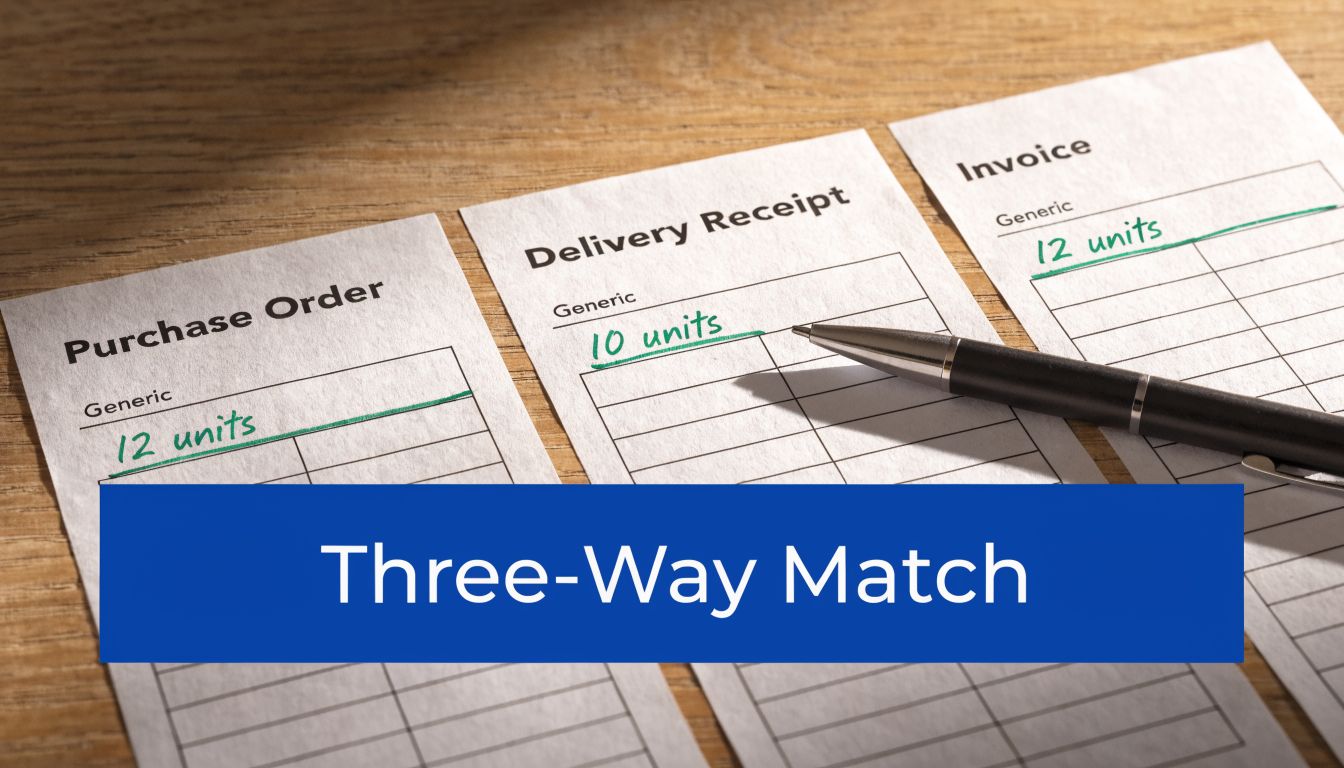
2. How do you handle invoice discrepancies and three-way matching?
What happens when the invoice says one thing, the approval says another, and the vendor wants payment today? That is the moment an AP hire shows whether they understand control, judgment, and cash protection.
This question matters because it separates candidates who can process bills from candidates who can protect the business. In a service business, that protection often looks different than it does in product-based companies. You may not have a warehouse receipt, but you still need a match against something credible: a signed proposal, manager approval, time records, contract terms, or proof that the work was completed.
The answer you want
Strong candidates start with diagnosis. They explain how they identify the type of discrepancy before they contact the vendor or release payment. That sounds simple, but it is where weak AP habits usually show up. If someone goes straight to “I would ask the vendor about it,” they are skipping the internal review that keeps your records clean.
A solid answer usually includes these steps:
- Match the supporting documents: Compare the invoice to the PO, approval, receiving record, contract, or service confirmation.
- Classify the variance: Price, quantity, duplicate billing, missing approval, wrong vendor details, tax issue, or timing difference.
- Hold the invoice correctly: Mark it clearly in the system so it does not get paid while the issue is unresolved.
- Route it to the right owner: Operations handles completion issues. Purchasing handles PO issues. AP handles duplicate and coding review. The vendor gets contacted only after the internal facts are clear.
- Document the resolution: Notes, attachments, corrected coding, and approval history should all sit in one place.
That sequence reduces rework. It also protects the audit trail.
For owners using QuickBooks, listen for whether the candidate can translate control into a simpler system. QuickBooks does not enforce every workflow the way a larger ERP does, so the AP person has to be disciplined about attachments, approval evidence, and status notes. A candidate who has only worked in highly automated systems may still be good, but they need to show they can operate without relying on software to catch every miss.
What good judgment sounds like
The strongest answers include trade-offs. For example, if the invoice is small but the discrepancy points to a recurring setup problem, a good AP specialist still fixes the root cause. If the vendor is pressing for payment and the service manager says the work is complete, they know when that is enough support and when it still needs controller review.
I also want to hear how they prevent the same issue from repeating. That could mean correcting the vendor record, tightening approval rules, or reviewing the accounts payable aging report to catch held invoices before they become relationship problems.
Duplicate invoices, rate mismatches, and missing approval trails usually point to a process weakness, not just a one-off mistake.
Red flags in the interview
Vague answers are the first warning sign. “I’m detail-oriented” tells you nothing. “I compare the invoice to the contract, confirm the service date with the department lead, place the bill on hold in QuickBooks, and keep the backup attached before requesting correction” tells you they have done the work.
Another red flag is a candidate who treats every discrepancy as a vendor problem. In service businesses, internal communication failures cause plenty of invoice issues. A manager may approve work informally. A subcontractor may bill based on an old rate sheet. A project lead may confirm completion in Slack but never update the file. Good AP hires know how to gather support from messy real-world operations without losing control.
What to score and what to test
Use a simple rubric so this question becomes part of a repeatable hiring system, not a gut call:
- Control mindset: Do they stop payment until the issue is resolved and documented?
- Problem diagnosis: Can they identify different discrepancy types instead of treating every issue the same way?
- System discipline: Can they explain how they would track holds, notes, and backup in QuickBooks?
- Escalation judgment: Do they know when to resolve it directly, when to involve a manager, and when to send it to the controller?
A short practical test works well here. Give the candidate three sample invoices: one duplicate, one with a price mismatch, and one service invoice with no formal PO but a manager email approval. Ask them how they would handle each item in QuickBooks and what documentation they would require before payment. That exercise usually gives more signal than the interview answer alone.
3. Describe your experience with vendor management and relationship maintenance
What happens when a key vendor says they will pause service unless they get paid today?
That scenario tests far more than politeness. It tests whether the candidate can protect cash, preserve the relationship, and keep records clean enough to resolve the issue fast. In service businesses, vendor management often includes subcontractors, software providers, landlords, benefit vendors, and freelancers. Each group affects operations differently, so the AP hire needs judgment, not just email etiquette.
A strong answer shows that the candidate understands two jobs at once. First, they maintain accurate vendor data, including payment terms, tax forms, contact details, remittance instructions, and approval paths. Second, they manage communication in a way that reduces friction without giving up control. That matters in businesses running on QuickBooks and Gusto because weak setup upstream creates downstream problems in coding, 1099 tracking, reimbursements, and close.
Listen for specificity. Good candidates explain how they keep vendor records current, where they store backup, how they document call notes, and how they confirm whether a complaint is caused by timing, missing approval, duplicate billing, or a true processing miss. Generic answers about “building relationships” usually mean they have not owned this work at a meaningful level.
The best AP professionals also understand trade-offs. A vendor may deserve a fast response without getting an immediate payment promise. A long-time supplier may need a phone call instead of another templated email. A new vendor asking to change banking details needs verification before anything else, even if they sound urgent.
What good vendor management sounds like
Strong candidates usually cover a few practical habits:
- They keep vendor master records accurate and review them regularly.
- They know which vendors require W-9 collection, insurance documents, or contract support.
- They document disputes and commitments inside the accounting workflow, not in scattered inbox threads.
- They communicate clearly about payment status, missing support, and expected resolution dates.
- They understand that payment timing affects vendor trust and owner cash planning at the same time.
A useful follow-up is, “Tell me about a time a vendor was frustrated with your company. What did you do first?” That question gets past rehearsed language. You want to hear a sequence: verify the account, review notes, identify the cause, communicate facts, and set the next action. If they skip straight to appeasement, they may create avoidable risk.
What to score and what to test
Use a rubric so this question becomes part of a repeatable hiring system:
- Vendor file discipline: Do they maintain complete records, approvals, tax documents, and current remittance details?
- Communication judgment: Can they calm a vendor down without making promises they cannot support?
- Cash flow awareness: Do they treat payment timing as an operating decision, not just an AP task?
- Fraud and compliance awareness: Do they verify changes carefully and connect vendor setup to reporting requirements?
A short test works well here. Give the candidate a mock email from a subcontractor claiming they are 15 days overdue, while your internal notes show the invoice is pending manager approval. Ask for two things: the reply they would send and the note they would enter in QuickBooks. That exercise shows whether they can be firm, clear, and organized under mild pressure.
If you want to add one owner-level discussion point, pull up an accounts payable aging report and ask how they would use it to prioritize outreach, spot strained vendor relationships, and explain overdue balances to management. Strong candidates connect vendor communication to reporting visibility. Weak ones treat the aging report as a static list instead of a decision tool.
4. Walk me through your month-end and year-end closing process for accounts payable
Month-end is where AP quality becomes visible. During the month, weak process can hide behind activity. At close, it shows up as missing invoices, cutoff mistakes, unexplained balances, and rushed questions from whoever owns the financials.
A strong candidate should be able to walk you through close in sequence. They should mention open invoices, accruals, vendor statement review when needed, reconciliations, supporting schedules, and cutoff logic. They should also know the difference between cash and accrual accounting because that concept appears regularly in technical AP interview sets and directly affects liability reporting.
Here’s a useful explainer to pair with the question during hiring:
What good close discipline sounds like
Listen for process, not speed claims. The best candidates explain how they identify invoices that belong in the period even if they haven’t been fully processed yet. In a service business, that often means reviewing recurring services, contractor invoices, software renewals, and expenses incurred before the cutoff date.
They should also talk about support. If they book an accrual, what backs it up? If they clear it next month, how do they avoid double counting? If an invoice comes in late, how do they determine whether it belongs in the prior period?
A candidate who understands AP close will talk about cutoff and support almost as much as payment processing.
Practical interview test
Give the candidate a short scenario. An invoice for work completed before month-end arrives after the books are nearly closed. Ask what they’d do. A solid answer will reference the period incurred, the approval status, and whether an accrual is needed to keep the statements accurate.
For year-end, ask one extra layer. How do they help prepare for tax reporting, audit requests, or contractor reporting cleanup? Even if they weren’t the final reviewer, they should know how AP records feed those processes.
This is one area where weak candidates often reveal themselves by speaking too generally. “I help with close” doesn’t mean much. “I review unpaid invoices, assess cutoff, prepare support for accrued expenses, and reconcile AP-related balances before the reporting package goes out” means a lot more.
5. How do you stay organized and prevent errors when processing high-volume invoices?
What happens when 80 invoices hit the inbox on the same day and five of them have missing approvals, unclear coding, or duplicate support? That is a true test of AP organization.
High-volume AP is less about hustle and more about control. In service businesses, the pressure points are familiar. Recurring software bills, subcontractor invoices, reimbursable project costs, and rush payments all compete for attention. If a candidate cannot explain how they sort routine work from exception work, errors show up fast in duplicate payments, late fees, coding mistakes, and vendor frustration.
The strongest candidates describe a repeatable workflow you can picture operating inside QuickBooks, BILL, or a similar AP tool. They do not rely on memory. They describe intake rules, exception queues, approval follow-up, and final review steps before payment is released. If you use Gusto for contractor payments or reimbursements that intersect with AP records, listen for whether they understand where handoffs can create duplicate entries or missed documentation.
A useful answer usually includes a few concrete controls:
- Intake discipline: Invoices are captured in one place, tagged with received date, vendor, amount, and due date before anything else happens.
- Exception handling: Invoices with missing approvals, missing PO detail, or unclear coding are moved into a separate queue so standard items keep moving.
- Duplicate checks: The candidate verifies vendor invoice number, amount, invoice date, and supporting documents before posting or paying.
- Approval visibility: Every pending item has an owner, status note, and follow-up date.
- Final review: Payment batches are reviewed for unusual changes, rushed requests, and vendor record mismatches before release.
That level of detail matters because service businesses often operate without the clean receiving documentation a product company might have. AP staff have to make judgment calls on job coding, class tracking, department allocation, and whether backup is sufficient. Organized candidates know how to make those calls visible instead of keeping them in their head.
The weak answer sounds polished but empty. “I stay organized by prioritizing.” “I pay close attention to detail.” “I work well under pressure.” None of that tells you how the person will handle 40 clean invoices and 12 problem invoices without losing track of either.
Ask one follow-up that forces specificity: “Walk me through your queue at 2 p.m. on a heavy invoice day. What sits where, and how do you decide what gets processed, escalated, or held?” That question usually separates candidates who have operated a real AP desk from candidates who have only supported one.
Practical scoring rubric
For service businesses, I like to score this answer on a simple 1 to 5 scale:
- 1: Vague. No system, no controls, no prioritization logic.
- 3: Describes a workflow, but lacks exception handling or review steps.
- 5: Explains intake, coding, approvals, exception management, duplicate prevention, and payment review in a sequence that would hold up under volume.
Simple interview test
Give the candidate a small batch exercise. Include ten invoices with a few common AP problems: one duplicate, one missing approval, one rushed vendor request, one invoice with unclear job coding, and one recurring bill already set up in QuickBooks. Ask them to explain how they would triage the batch, what they would post, what they would hold, and what they would document.
That exercise tells you more than a polished interview answer. You see whether the candidate can protect accuracy while keeping work moving, which is the balance a strong AP hire has to manage every week.
6. Tell me about a time you identified a significant AP problem or improved efficiency. What was the impact?
Many interviews often become sloppy. Owners ask for an “improvement example,” the candidate tells a polished story, and no one checks whether the story shows judgment, ownership, or measurable thinking.
The best way to use this question is to require structure. Ask for the situation, the problem, the action they took, and the result. Behavioral AP questions like “Describe a time you caught a payment error” consistently appear in top interview lists, and candidates who practice structured responses often present more clearly.
What separates a strong story from a weak one
A strong answer starts with a real operational issue. Duplicate vendor records. Poor approval flow. Recurring invoice coding errors. Missed credits. Late month-end submissions. Then the candidate explains what they changed and how they verified that it worked.
A weak answer usually sounds like one of these:
- They “helped the team become more efficient” without naming the process.
- They took credit for a group fix but can’t explain their specific role.
- They describe speed improvement only, with no mention of control or quality.
The best AP process improvements reduce friction without weakening controls.
Better follow-up questions
Don’t stop at “What was the impact?” Ask:
- What resistance did you face?
- How did you document the new process?
- What did you change in the system versus outside the system?
- How did you make sure the improvement stuck after the first month?
AP improvements often fail in handoff. Someone creates a smarter spreadsheet or a cleaner intake process, but it depends on one person remembering to maintain it. Strong candidates think about repeatability. They build something the next person can follow.
If the candidate can’t quantify the result, that’s not always fatal. Not every company tracked the same metrics well. But they should still be able to describe the business effect clearly. Fewer exceptions. Cleaner approvals. Faster close support. Better vendor communication. More reliable coding. That’s the kind of language that signals operational maturity.
7. How do you ensure compliance with tax requirements in accounts payable, particularly 1099 tracking and vendor verification?
This question matters more in service businesses than many owners realize. If you rely on contractors, agencies, freelancers, or specialty vendors, AP often becomes the front line for tax compliance. By the time year-end arrives, it’s too late to wish vendor records had been set up properly.
Strong candidates know that 1099 compliance starts at onboarding, not in January. They should talk about collecting the right vendor documentation, reviewing classification, maintaining consistent vendor records, and reconciling payments before filing season gets hectic.
The answer should start before payment
A disciplined response usually includes these steps:
- Vendor setup review: Collect and verify W-9 information before the vendor becomes active.
- Classification logic: Separate vendors likely to require 1099 reporting from those that won’t.
- Ongoing coding consistency: Make sure payments hit the right accounts throughout the year.
- Year-end reconciliation: Review vendor totals and exceptions before forms are prepared.
Senior AP roles are often tested on 1099 preparation and year-end reporting because those tasks are tied directly to tax compliance and accurate transaction categorization. That’s especially important when QuickBooks data feeds reporting used by owners, tax preparers, or outside accountants.
What red flags look like
Be cautious if a candidate talks about 1099s as a simple year-end export. That usually means they’ve experienced the process only after someone else cleaned the data. The essential work is in setup, maintenance, and exception review.
You also want to hear how they handle uncertainty. Good candidates won’t make tax determinations casually. They’ll explain the process they follow, the documentation they collect, and when they escalate a classification question.
For employers, a useful practical test is to give the candidate three sample vendor setups and ask which ones deserve extra review for 1099 handling. You’re not looking for tax-law performance. You’re looking for process awareness.
If your team needs a cleaner operational approach, Steingard’s walkthrough on how to generate 1099 for contractors helps show the kind of year-round discipline good AP hires should support.
8. Describe how you would support financial visibility and reporting for a business owner using AP data
What does a business owner get from a strong AP hire besides bills getting paid on time?
The best candidates answer this question by connecting AP work to owner decisions. In a service business, AP data should help the owner see cash commitments early, trust job or client profitability, and spot vendor issues before they disrupt operations. If the company runs on QuickBooks and Gusto, that usually means consistent expense coding in QuickBooks, clear cutoff discipline, and clean coordination with payroll timing so weekly or semi-monthly cash needs are visible in one place.
A practical answer should sound operational, not theoretical. Good candidates talk about how they would code expenses by class, customer, location, project, or service line based on how the owner reviews the business. They should also explain how they would flag large upcoming payments, credits, recurring spend changes, and unusual vendor activity that could distort monthly reporting.
What strong reporting support looks like
Owners do not need a long AP report. They need a short, reliable view of what matters.
A capable candidate will usually describe a reporting rhythm such as:
- Weekly cash visibility: upcoming bills due in the next 7 to 14 days, grouped by priority and cash impact
- Monthly expense accuracy: bills posted to the right periods so the P&L reflects what occurred
- Vendor trend tracking: repeat price increases, late fees, duplicate charges, credits, and disputed items
- Project or client cost visibility: expense coding that helps the owner assess margin by job, client, or service category
- Exception reporting: anything unusual enough to deserve review, such as a sudden spend spike, missing support, or a bill outside normal approval patterns
Service business owners rarely ask AP for “more reporting;” instead, they inquire why cash feels tighter than expected, why a client looks less profitable this month, or why expenses jumped in one department. A strong AP hire knows how to trace those questions back to coding quality, timing, and vendor activity.
What to listen for in the interview
The strongest candidates explain the trade-off between speed and reporting accuracy. Entering bills quickly helps cash management, but rushed coding creates bad management reports. Holding every bill for perfect detail slows close and frustrates vendors. Good AP staff know how to set rules for standard items, escalate true exceptions, and keep the books decision-ready without turning AP into a bottleneck.
In QuickBooks-heavy environments, listen for candidates who mention class tracking, customer or project coding, memorized or recurring transactions, and clean vendor naming conventions. In businesses that also use Gusto, stronger candidates often mention payroll timing as part of cash visibility, even if payroll itself sits outside AP. That shows they understand how owners experience cash flow in real life. They see outgoing cash as one operating picture, not separate software tabs.
Practical test and scoring rubric
A simple test works well here. Give the candidate a sample AP aging, three recent vendor bills, and a basic P&L by class or project from QuickBooks. Ask what they would review before presenting this to the owner, what they would fix first, and what they would highlight in a weekly cash update.
Score the answer on four points:
- Reporting awareness: Do they connect AP activity to cash, margins, and owner decisions?
- System fit: Do they know how QuickBooks coding structure affects reporting quality?
- Exception judgment: Can they spot what needs escalation versus what should be handled routinely?
- Communication: Can they summarize findings in plain language an owner would use?
Red flags to watch for
Be careful with candidates who describe reporting support as “running an AP aging” and stopping there. That is a clerical answer, not an ownership-minded one.
Another red flag is overconfidence without process. If someone says they can give owners perfect visibility but cannot explain coding rules, review timing, or how they would handle missing information, the reports will look polished and still be unreliable.
The right hire treats AP data as operating data. That mindset is what turns your interview process from a list of generic questions into a repeatable hiring system.
Accounts Payable Interview: 8-Point Comparison
| Question | Implementation complexity 🔄 | Resource & tools ⚡ | Expected outcomes ⭐📊 | Ideal use cases 💡 |
|---|---|---|---|---|
| Tell me about your experience with accounts payable processes and accounts payable software | Medium, requires cross-platform fluency and process knowledge | Accounting platforms (QuickBooks, NetSuite, Bill.com), integrations, training time | Faster onboarding, consistent AP execution, automation opportunities ⭐📊 | Multi-client environments, system migrations, hires needing immediate AP coverage |
| How do you handle invoice discrepancies and three-way matching? | Medium–High, procedural rigor and escalation paths required | PO systems, receiving records, matching automation or spreadsheets | Fewer duplicate/erroneous payments, stronger internal controls, fraud prevention ⭐📊 | Organizations using POs or receiving goods/services where accuracy is critical |
| Describe your experience with vendor management and relationship maintenance | Low–Medium, emphasizes coordination and documentation | Vendor master file, communication channels, compliance docs (W-9s, insurance) | Improved payment relationships, capture of discounts, reduced disputes ⭐📊 | Service businesses with many vendors or where supplier terms affect cash flow |
| Walk me through your month-end and year-end closing process for accounts payable | High, time-sensitive, accruals and reconciliations demand precision | Reconciliation tools, accrual schedules, audit-ready supporting schedules | Accurate financial statements, timely closes, audit readiness ⭐📊 | Period-end reporting, audit preparation, companies with accrual accounting |
| How do you stay organized and prevent errors when processing high-volume invoices? | Medium, requires scalable systems and consistent controls | Checklists, batching processes, invoice logs, automation for duplicate checks | Higher throughput with maintained accuracy, fewer missed discounts or duplicates ⭐📊 | High-volume AP teams, scaling businesses, outsourced bookkeeping setups |
| Tell me about a time you identified a significant AP problem or improved efficiency. What was the impact? | Variable, depends on solution scope and change management | Data analysis tools, stakeholder coordination, implementation resources | Measurable time/cost savings, reduced errors, process standardization ⭐📊 | Continuous improvement initiatives, cost-reduction projects, KPI-driven teams |
| How do you ensure compliance with tax requirements in accounts payable, particularly 1099 tracking and vendor verification? | Medium–High, requires regulatory knowledge and ongoing maintenance | W-9 collection systems, 1099 tracking tools, state/federal guidance resources | Reduced filing risk, accurate 1099s, documented vendor classification ⭐📊 | Businesses engaging contractors/subcontractors across states, tax-sensitive environments |
| Describe how you would support financial visibility and reporting for a business owner using AP data | Medium, combines data accuracy with reporting design | Aging reports, project/client coding, dashboarding tools (spreadsheets/BI) | Better cash forecasting, prioritized payments, actionable owner insights ⭐📊 | Owners needing real-time cash visibility, profitability by project, or payment prioritization |
Beyond Questions Building Your AP Dream Team
Asking stronger accounts payable interview questions is the first improvement. Building a repeatable hiring system is the bigger one.
Most hiring mistakes in AP don’t happen because owners ask the wrong single question. They happen because the process has no structure. One interviewer focuses on personality. Another focuses on software. No one checks how the candidate handles exceptions, thinks about close, or supports reporting. Then the team hires someone who seems capable but struggles the first time approvals pile up or vendor records need cleanup.
A better process is simple. Use a short set of role-specific questions like the ones above. Add a practical exercise. Score answers the same way for every candidate. Then compare people against the actual work, not against whichever answer sounded most polished in the moment.
For service businesses using QuickBooks and Gusto, that structure matters even more. You’re often hiring for a role that touches bookkeeping accuracy, vendor communication, contractor payments, close support, and management reporting all at once. That means the right hire needs more than bookkeeping basics. They need process discipline, clean communication, software comfort, and enough judgment to handle gray areas without creating bigger problems.
A practical interview framework usually includes three parts.
First, test workflow knowledge. Ask the candidate to explain how an invoice moves from receipt to payment to reporting. Make them name the controls. Ask how they document exceptions. If they can’t walk the path clearly, they probably won’t run it well.
Second, test operating judgment. Give them a real scenario: a duplicate invoice risk, a missing approval, a vendor complaint, or a late-arriving bill during close. Listen for sequence, not confidence. Strong candidates verify facts, document the issue, and protect the business before they act.
Third, test system fit. If your company runs on QuickBooks and Gusto, your AP hire should be comfortable working in that environment. They don’t need to know every advanced feature on day one, but they should understand how AP records affect categorization, reconciliations, contractor reporting, and visibility for the owner.
Scoring rubrics help more than generally anticipated. Keep them lean. Rate each candidate on workflow depth, control awareness, software fluency, communication quality, and reporting mindset. A simple scale works well if everyone uses the same definitions. That keeps one charming answer from outweighing weak fundamentals.
Practical tests matter too. Ask candidates to review a small invoice packet, identify what’s missing, flag a discrepancy, or draft a response to a vendor. In AP hiring, work samples expose reality fast. They show whether the person can organize information, spot risks, and communicate clearly under light pressure.
Red flags are usually obvious once you know what to watch for. Be cautious if a candidate speaks only in broad terms, can’t describe a real exception they handled, treats AP as pure data entry, or talks about speed without mentioning controls. Also be careful with candidates who overstate software skill. The best hires are usually specific and honest. They can tell you exactly what they owned, what they supported, and where they still needed review.
At Steingard Financial, we help service businesses build scalable back offices that support accurate books, cleaner reporting, and better decisions. That often includes improving the systems around AP, not just the staffing itself. When your interview process is structured, your practical tests are realistic, and your tech stack is aligned with how your business runs, hiring gets easier and outcomes get better.
Ready to build a financial team you can depend on?
If you want help designing a stronger AP hiring process or tightening the bookkeeping systems behind it, Steingard Financial can help. The team supports service businesses nationwide with QuickBooks and Gusto setup, AP and AR management, reconciliations, reporting, payroll support, and scalable back-office processes that give owners clearer visibility and fewer headaches.